Marketing Analytics Platform: A Buyer's Checklist for Growing Teams
What a marketing analytics platform does that a dashboard or BI tool does not, a nine-point buyer's checklist from connectors to data residency, the red flags to watch for and the questions to ask in every demo.
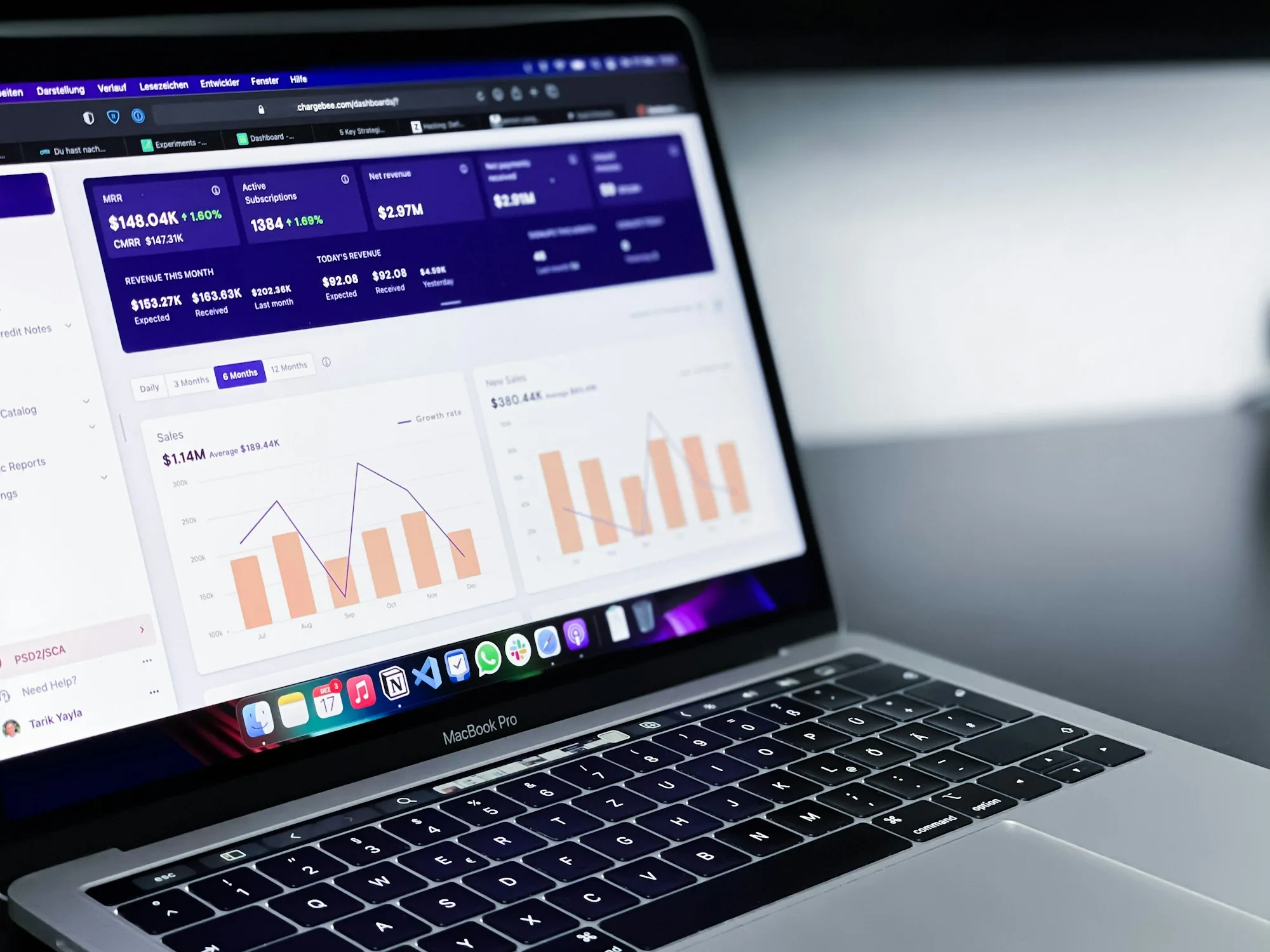
A marketing analytics platform pulls data from your ad channels, website, app and CRM into one place, counts each conversion once, attributes it to the channels that earned it and shows what to change next. This buyer's checklist helps you judge any marketing analytics platform on coverage, accuracy, freshness, governance, privacy and cost.
What does a marketing analytics platform do?
It turns channel data into decisions. A good one connects to every channel you buy, de-duplicates conversions, applies an attribution model you understand and points to the next action.
If you want a feature list for reporting tools, our earlier guide to choosing digital marketing reporting software covers it. This checklist goes further: whether the numbers are right, and whether the platform helps you act on them.
Marketing analytics platform vs dashboard vs BI tool
- Marketing dashboard: a visual layer over data you already have, such as a Looker Studio report on GA4 and Google Ads. Quick and cheap, but it shows each tool's numbers without reconciling them.
- BI tool: general-purpose analysis in tools such as Power BI or Tableau, usually on a data warehouse. Very flexible, but someone has to build the pipelines, data models and metric definitions.
- Marketing analytics platform: built for cross-channel reporting on marketing data, with connectors, de-duplication, attribution and often recommendations included.
A dashboard answers "what did each tool report?" A platform answers "what happened overall, and what should we change?" If you run one or two channels and need a weekly report, a dashboard may be enough.
Why are growing teams rethinking their marketing analytics tools?
Because more tools have not meant more use. Gartner's survey of 405 marketing leaders, run in May and June 2023, found that utilization of the martech stack's capability "dropped to just 33% on average in 2023", down from 42% in 2022 and 58% in 2020, according to its August 2023 press release.
The lesson for buyers: judge a platform by what your team will use every week, not by the length of its feature list.
The marketing analytics platform checklist
Score each vendor on these nine points. Each one comes with the question to ask in the demo.
1. Connectors for the channels you actually buy
The platform must connect natively to every channel in your media plan, not just Google and Meta. That usually means TikTok, Snapchat, LinkedIn, X and YouTube, plus GA4, your CRM, your email tool and, for apps, a mobile measurement partner such as AppsFlyer, Adjust or Branch.
Regional channels matter. According to DataReportal's Digital 2026: Saudi Arabia, "Snapchat had 25.3 million users in Saudi Arabia in late 2025", based on Snap's advertising resources. A platform without a Snapchat connector misses a core Saudi channel.
Ask: Is each connector native? Which fields come through? How much history is backfilled?
2. De-duplicated conversions
Every ad platform claims the conversions it touched, so channel totals add up to more than your real sales. The platform should count each order or lead once.
Example, for illustration: in one month, Meta reports 410 purchases, Google Ads 260 and TikTok 180, a total of 850. Your store recorded 600 orders. A dashboard that adds channel reports overstates sales by 250, about 42%, and every cost-per-acquisition figure looks better than it is.
Ask: Show us one order and every channel that claimed it. How do you decide which counts?
3. Attribution models you can choose and explain
You should be able to switch models and see how credit moves between channels. GA4 and Google Ads now offer only data-driven and last-click models, so a platform that adds first click, linear, time decay, position-based and custom models gives you views you cannot get there. Our guide to marketing attribution models explained covers how each one splits a sale.
Ask: Which models do you support, and can we compare two side by side?
4. Web and app data in one view
If you have an app, installs and in-app revenue must sit next to web sessions and ad spend. Otherwise app campaigns look unprofitable and web campaigns get credit for app sales.
Ask: Which mobile attribution partners do you connect, and can we see in-app revenue by campaign?
5. Refresh frequency and data stability
Know how fresh each source is and when numbers stop changing. Google's GA4 data freshness page lists typical processing of 2-6 hours for standard intraday data and 12 hours for daily data, and warns: "Data processing can take 24-48 hours. During that time, data in your reports may change."
A platform that refreshes hourly cannot be fresher than its sources. What matters is that it shows when each figure last updated and restates past days when sources revise them.
Ask: How often does each connector refresh, and do you restate recent days?
6. Recommendations, not just reports
Reporting software tells you what happened. A marketing analytics platform should also tell you what to change, show the evidence, and let someone approve the change before it reaches a live campaign.
Ask: Show us a recommendation, the data behind it and the approval step. Can every change be undone?
7. Governance and permissions
As teams and agencies grow, access control matters as much as charts. Look for roles, permissions per brand or client, approval steps and a log of who changed what.
Ask: Can an analyst see a campaign without editing it? Can we keep two brands or clients fully separate?
8. Data residency and privacy
Ask where data is stored and processed, and how transfers out of the country are handled. These rules differ across your markets:
- UAE: Federal Decree Law No. 45 of 2021 on the protection of personal data sets requirements for cross-border transfer. Free zones such as DIFC have their own law, DIFC Law No. 5 of 2020.
- Saudi Arabia: the Personal Data Protection Law took effect on 14 September 2023 and its grace period ended on 14 September 2024, as Clyde & Co reported. Transfers to countries SDAIA has not deemed adequate need appropriate safeguards.
- Qatar: Law No. (13) of 2016 Concerning Personal Data Protection applies, overseen by the National Cyber Security Agency, according to DLA Piper. The Qatar Financial Centre has separate rules.
- UK: the ICO treats sending personal data to an organization outside the UK as a restricted transfer. It needs UK adequacy regulations, an appropriate safeguard such as the International Data Transfer Agreement, or an exception.
For consent rules in each market, read our PDPL vs UK GDPR marketing consent guide. This article is general information, not legal advice.
Ask: Where is our data hosted? Who are your sub-processors? Will you sign a data processing agreement?
9. Total cost
Compare the full cost, not the headline price. Add seats, connector or data-volume fees, any data warehouse you need, setup work and the analyst hours spent fixing data.
Ask: What would we pay in year two with two more brands, three more channels and five more users?
What are the red flags in marketing reporting software?
Walk away, or dig deeper, if you see any of these:
- Conversion totals that equal the sum of each channel's own claims.
- Only one attribution model, or a model nobody can explain.
- Key channels such as Snapchat or TikTok handled by CSV upload.
- No clear answer on where data is stored.
- Recommendations without evidence, or changes pushed live without an approval step.
- No export or API, so your data is locked in.
- A demo that only ever shows sample data.
What should you ask in a marketing analytics platform demo?
Bring your own accounts and make the vendor work with real data:
- Connect two of our channels live and show the last 30 days.
- Pick one order and show every channel that claimed it.
- Switch from last click to position-based. What moves, and why?
- Show when each number last refreshed.
- Show a recommendation, its evidence and how we approve it.
- Set up a view-only analyst role in front of us.
- Tell us where our data will be hosted and who processes it.
What should buyers in the UAE, Saudi Arabia, Qatar and the UK check?
Local channels, currencies and regulators change what "good" looks like.
- Gulf media mix: confirm native connectors for Snapchat and TikTok as well as Google and Meta, with spend in AED, SAR or QAR reported in one base currency.
- Offline orders: if sales close on WhatsApp, by phone or on cash on delivery, check that the platform can import offline and delivered-order data, not just checkout events.
- Peak reporting: Ramadan, Eid and White Friday campaigns need daily, de-duplicated numbers while budgets are still moving, not a month-end export.
- Saudi transfers: if data leaves the Kingdom, ask which safeguard the vendor relies on.
- UK GDPR: for UK customers' data hosted abroad, ask for the transfer mechanism and the vendor's transfer risk assessment.
How Grower helps
Grower Streamline includes an attribution engine that de-duplicates conversions from every channel and app into one unified count, with six models: last click, first click, linear, time decay, position-based and custom. It integrates with Google Ads, Meta Ads, TikTok Ads, Snapchat Ads, LinkedIn Ads, X Ads, Google Analytics, HubSpot, AppsFlyer, Adjust and more, with approvals and permissions for enterprise teams.
Grower Optimize reads web and app signals alongside every ad channel, recommends what to change, and pushes each change to the channel once you approve it.
Frequently asked questions
What is the difference between marketing analytics and marketing reporting?
Marketing reporting shows what happened in each channel, usually in charts and scheduled reports. Marketing analytics explains why it happened and what to do next, by reconciling channels, de-duplicating conversions and applying attribution. Reporting is part of analytics, but a reporting tool alone will not tell you which channel actually drove a sale or where to move budget.
Do I need a data warehouse for marketing analytics?
Not always. A data warehouse helps if you need to join marketing data with finance, product or support data and have analysts to maintain it. Many growing teams start with a marketing analytics platform that handles connectors and de-duplication for them, then add a warehouse later if their questions outgrow it.
What should a marketing dashboard include?
A useful marketing dashboard shows spend, de-duplicated conversions, revenue or pipeline, cost per acquisition and ROAS by channel, against targets and the previous period. It should name the attribution model behind every figure and when the data last refreshed. Keep it to the few metrics that drive budget decisions, and link to detail rather than crowding the first screen.
Is GA4 enough as a marketing analytics platform?
GA4 is a strong free web and app analytics tool, but it only sees what happens on your site and app. It cannot see impressions on Meta, TikTok or Snapchat, it offers only data-driven and last-click attribution, and its numbers will not match each ad platform's own reports. Most multi-channel teams use GA4 as one source inside a wider platform.
Want to run this checklist against your own channels? Book a Grower demo and a specialist will walk through each point live, tailored to your channels.